
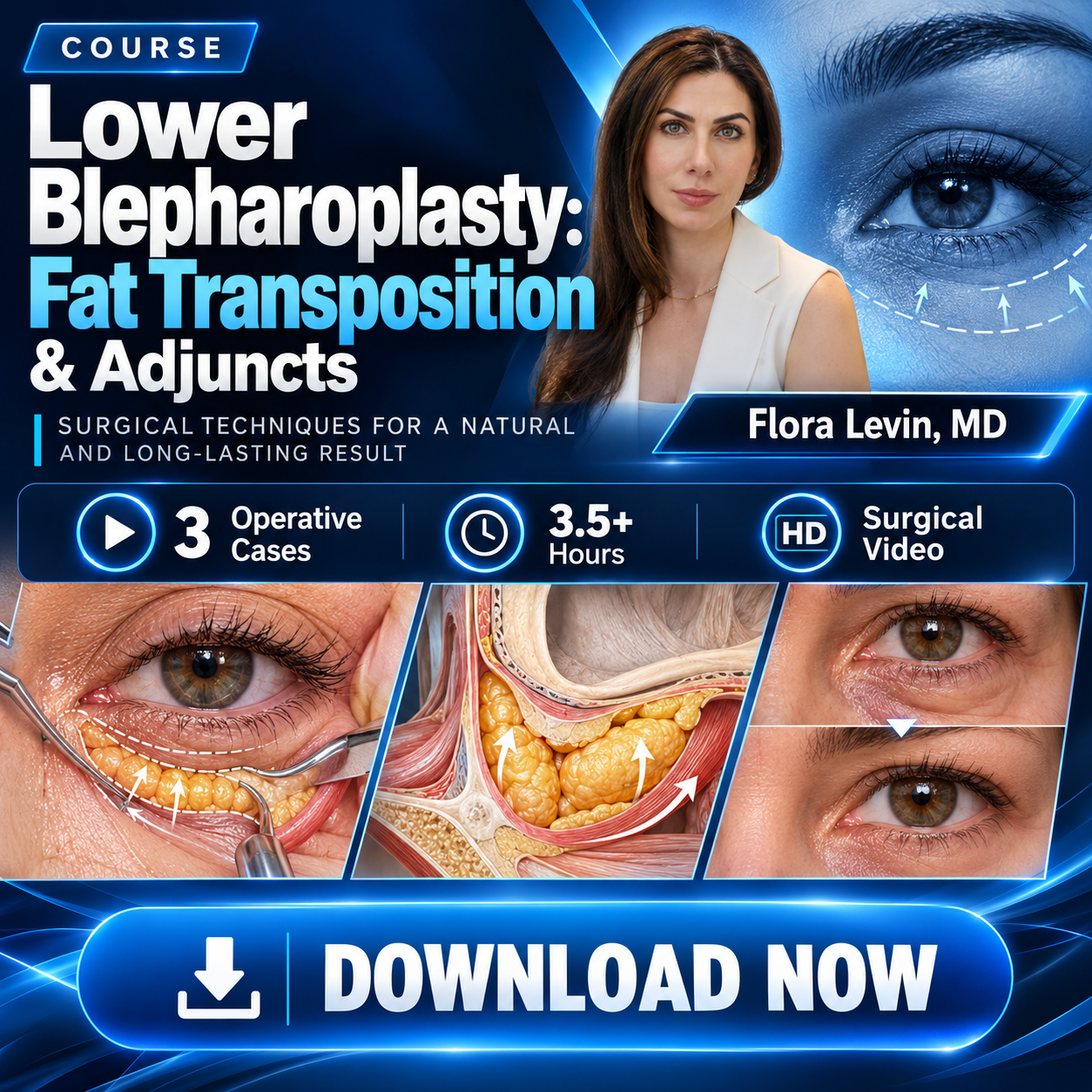





Advanced Lower Blepharoplasty — Surgical Education Video Series
Professional Educational Content in Lower Eyelid and Periocular Surgery
Format: HD Medical Education Video Series
Edition: 2026
Content: 3 Recorded Surgical Cases
Runtime: 3.5+ Hours
Included: 3 HD Videos + 3 English SRT Subtitle Files
File Size: 8.45 GB
Access: Digital On-Demand
Professional Surgical Education
This digital educational series presents recorded clinical cases related to lower eyelid and periocular surgery.
Across three surgical cases and more than 3.5 hours of educational video content, viewers can observe clinical assessment, anatomical considerations, procedural planning, and different approaches used in professional surgical practice.
The series provides educational discussion of lower eyelid anatomy, periocular structures, orbital fat considerations, tissue management, and the relationship between the lower eyelid and cheek.
Each recorded case presents a different clinical context, allowing qualified medical professionals to observe how procedural considerations may vary between cases.
Educational Topics
Lower Eyelid Anatomy
Review anatomical structures relevant to lower eyelid and periocular surgical practice.
Clinical Assessment
Observe considerations involved in patient assessment and procedural planning.
Transconjunctival Approach
Educational coverage of the transconjunctival approach and relevant anatomical considerations.
Orbital Fat Considerations
Review professional discussions related to orbital fat compartments, preservation, positioning, and management.
Periocular Anatomy
Explore the anatomical relationship between the lower eyelid, surrounding soft tissues, and cheek.
Tissue Management
Review considerations related to skin, soft tissue, volume, and lower eyelid support.
Case-Based Decision-Making
Observe how clinical and anatomical findings may influence procedural planning in different cases.
Topics Covered
• Lower eyelid anatomy
• Clinical assessment
• Procedural planning
• Transconjunctival approach
• Orbital fat anatomy
• Fat preservation considerations
• Fat positioning concepts
• Periocular volume considerations
• Lid–cheek anatomy
• Lower eyelid support
• Skin and soft-tissue considerations
• Periocular surgical concepts
• Clinical decision-making
• Case-specific planning
• Post-procedure considerations
Three Recorded Surgical Cases
Case 1 — Assessment & Anatomy
A recorded clinical case covering assessment, relevant anatomy, procedural planning, and surgical considerations.
Case 2 — Orbital Fat Considerations
A case-based presentation covering orbital fat anatomy, tissue management considerations, and procedural planning.
Case 3 — Periocular Surgery
A recorded surgical case covering lower eyelid and periocular anatomy, tissue considerations, and case-specific clinical decision-making.
Together, the three cases provide qualified medical professionals with additional educational exposure to different clinical presentations and surgical considerations.
Intended Audience
This professional educational series may be relevant to:
• Plastic Surgeons
• Facial Plastic Surgeons
• Oculoplastic Surgeons
• Ophthalmologists
• Dermatologic Surgeons
• Aesthetic Surgeons
• Plastic Surgery Residents
• Surgical Fellows
• Qualified Healthcare Professionals
Digital Course Package
✓ 3 Recorded Surgical Cases
✓ 3.5+ Hours of HD Educational Content
✓ 3 English SRT Subtitle Files
✓ 8.45 GB Digital Package
✓ Lower Eyelid Anatomy
✓ Transconjunctival Approach
✓ Orbital Fat Considerations
✓ Periocular Anatomy
✓ Tissue Management Considerations
✓ Case-Based Clinical Planning
✓ Digital On-Demand Access
Professional Medical Education Through Recorded Clinical Cases
This series combines three recorded surgical cases with educational discussion of anatomy, assessment, planning, and clinical considerations relevant to lower eyelid and periocular surgery.
2026 Digital Medical Education Series
3 Recorded Cases • 3.5+ Hours • HD Videos • English Subtitles • 8.45 GB
Digital Access After Purchase
For professional medical education purposes only. Intended for qualified healthcare professionals. This educational material does not replace formal medical education, supervised surgical training, institutional protocols, or independent professional clinical judgment.



Reviews
There are no reviews yet.